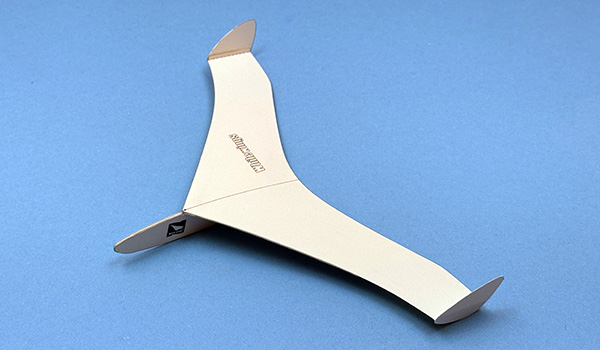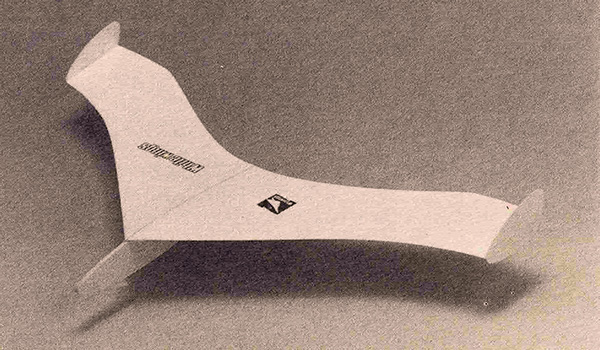
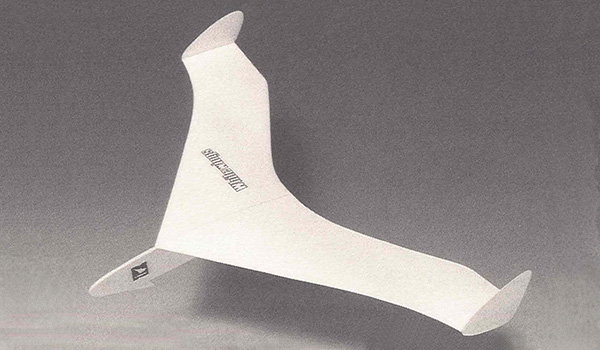
As a principle, a longer distance between the main wing and the horizontal tailplane maintains the longitudinal stability of the plane. Also, most of the regular planes have a main wing with a dihedral angle to get their lateral stability when they tilt to one side. Since this tailless plan doesn't have either characteristic, it requires the sweptback angle design of the main wing in order to substitute the trailing edges of the main wing for the horizontal tailplane. Moreover, since the sweptback angle of the main wing can be made to get the lateral stability, it acts as a substitute for the dihedral angle. The sweptback angle, however, tends to cause "tip stall" which sends the plane into a spin, so the sharpness of this angle has been reduced towards the tips of the main wing. This design process ended with the birth of the main wing of this Whitewings tailless plane. Follow the instructions, then an appropriate adjustment will make your plane fly well. Give it a try!
First released in Volume 1, the Tailless Plane was updated here to include a paper notch instead of a metal hook for catapult launching.
| Year Released: | 1995 |
|---|---|
| Airplane Class: | Experimental |
| Material: | Paper |
| Wingspan: | 234 mm |
| Length: | 145 mm |
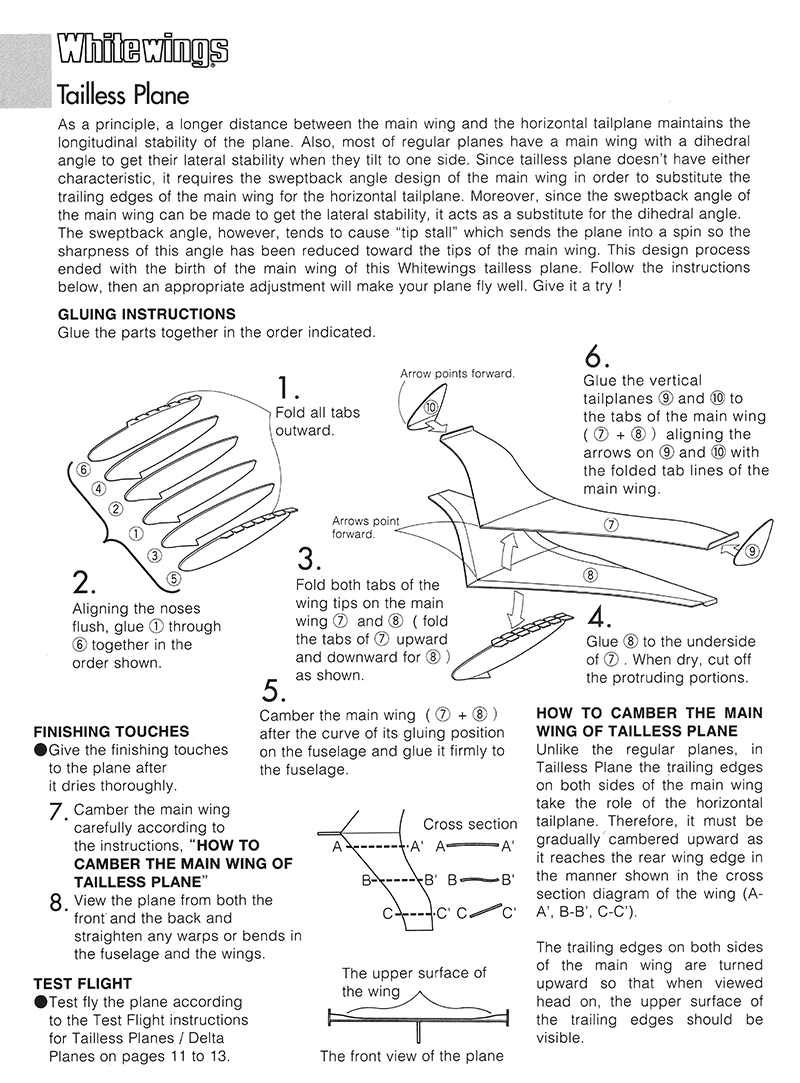
For general instructions regarding the best ways to cut out and assemble your Whitewings glider please read through our detailed build instructions. This will tell you what type of glue to use, how to adjust the center of mass, how to properly camber your wings and other details. Once you have your paper airplane built, please read through our flight instructions which will give you many professional tips on how to get the best performance from your Whitewings gliders. The specific instructions for this paper airplane model are in the diagram below.